
Pain In Fleshy Part of Hand Under Thumb: Treatment & Relief Options
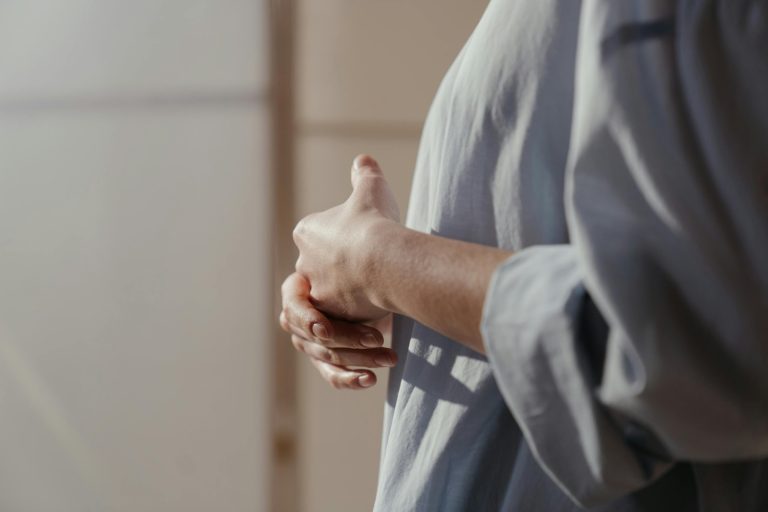
If you’re feeling pain in the fleshy part of your hand under your thumb, you’re probably looking for ways to relieve the pain. Our thumbs perform around 50% of all hand functions. When we injure our thumbs or feel pain, it becomes difficult to perform everyday actions.
Most people take their thumbs for granted until they start having issues. If you’re having issues with your thumb movements, normal hand functions become challenging, and you should look to solve the problem as quickly as possible.
There are several reasons why you might be having problems with your thumb, and today, we’ll talk about all of them and give you potential treatment and relief options to pursue.
Understanding Hand Anatomy and Common Problems
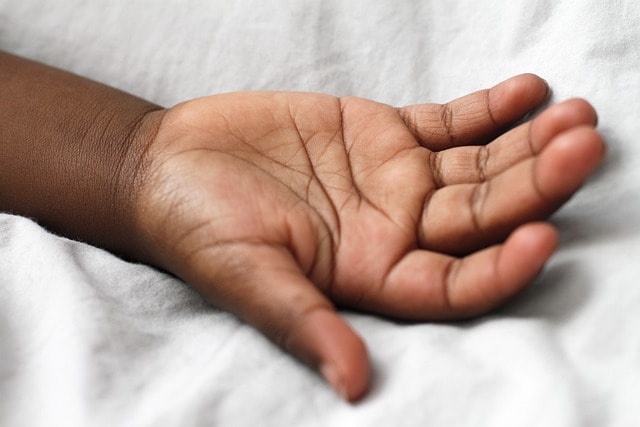
The hand consists of ligaments, muscles, and bones that support dexterity and flexible movement. The muscles within the hand contract to allow movement of the bones.
Ligaments bind the joints of the hand, while the tendons connect muscles in the hand with the bones to support movement.
Furthermore, the hand has many nerves, veins, and arteries that give sensation to the fingers and other hand areas and blood flow. The hand consists of three major parts including:
- Carpal bones: These bones form the wrist, and two rows of eight carpal bones are connected to the arm bones.
- Metacarpal bones: The whole middle part of the hand is created by metacarpal bones.
- Phalanges bones: Phalanges are located within the fingers. All of the fingers have three phalanges, while the thumbs have two.
What Causes Thumb Pain?
Many different causes can lead to pain. Here are some of the most common ones and what they are:
Basal Joint Arthritis
Basal joint arthritis, also known as thumb arthritis, affects the base of the thumb CMC joint and can lead to pain, swelling, red skin, tenderness, stiffness, decreased range of motion, and pain when gripping.
Everyday activities wear and tear the CMC joint, causing pain, inflammation, and, ultimately, thumb arthritis. The cartilage gets worn, and joints lose the lubrication and cushioning needed for the joints to glide easily without any friction.
Anyone can develop thumb arthritis over the years, as it’s basically a part of the aging process.
Carpal Tunnel Syndrome
Carpal tunnel syndrome is basically a pinched nerve in your hand. The median nerve is located within the carpal tunnel, runs into the palm, and gives sensation to all the fingers.
When the nerve within the carpal tunnel is pinched, patients feel tingles or numbing in their ring, middle, or index fingers.
They can also feel the same symptoms in their thumbs, along with burning pain or shock sensations. Severe carpal tunnel syndrome can lead to thumb muscle atrophy and weakness.
Thumb Sprain
A thumb sprain is caused by the damage or stretching of the thumb’s ligaments. Ligaments are a group of dense fibrous tissue that connects different bones. Patients with thumb sprains usually feel pain around and in damaged joints.
Thumb sprains usually occur when patients fall on their hands or when they collide with another object. They happen when the ligaments are stretched beyond their current limit. Most thumb sprains occur on the ulnar collateral ligament within the joint where the palm and the thumb meet.
Patients usually feel pain in their thumb or have a “loose” sensation. A sprain can also weaken the thumb and make it more difficult to grab objects
Trigger Thumb
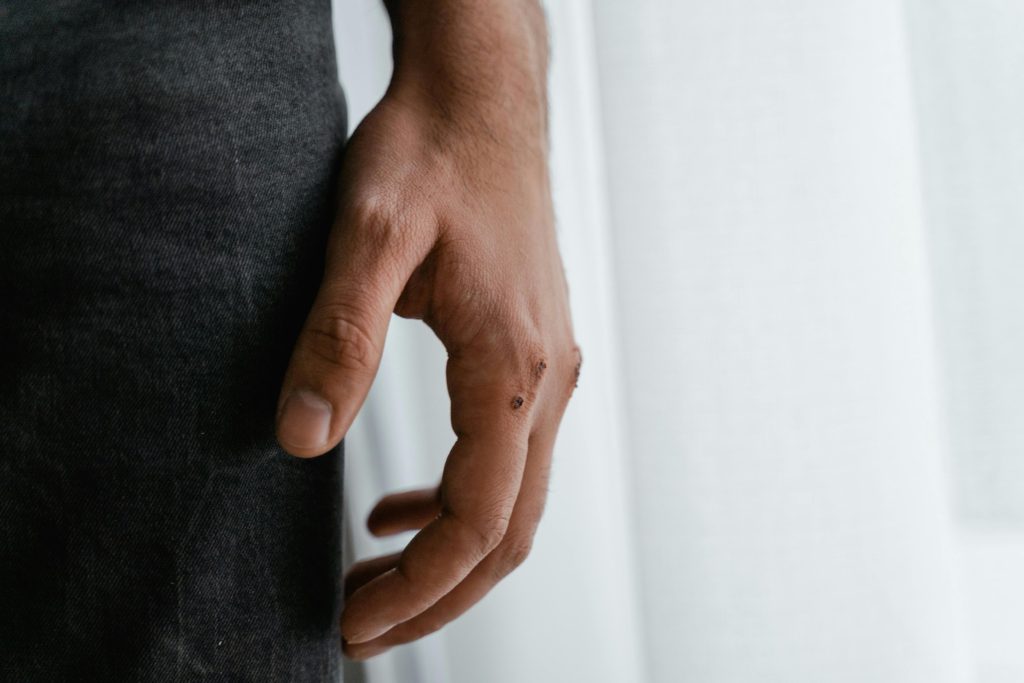
Trigger fingers are a known condition caused by the inflammation of the tendon sheath. This condition can affect all fingers, including the thumb. The thumb locks or latches in a bent position due to an injury or repetitive activities.
Some of the most common symptoms of a trigger thumb include stiffness or pain at the base of the thumb, sore thumb base of the thumb, inability to straighten the thumb, and popping or clicking when moving the thumb.
There are no exact reasons why patients develop this condition; however, it’s more common in people with rheumatoid arthritis and diabetes. Some studies indicate that this condition can sometimes be caused by repetitive pinching or gripping.
Skier’s Thumb
Skier’s thumb is a specific type of sprain on the collateral ligament. This ligament supports the thumb for gripping and pinching; when damaged, patients can’t perform these activities. At the same time, it leads to chronic instability and thumb looseness.
It happens when a person falls on their thumb while gripping something. For example, when people go out skiing, they hold ski poles tightly and often fall down, resulting in this type of injury.
That’s why the condition is called Skier’s thumb. Some common symptoms of Skier’s thumb include pain, bruises, and swelling.
Diagnosing Thumb Pain Conditions
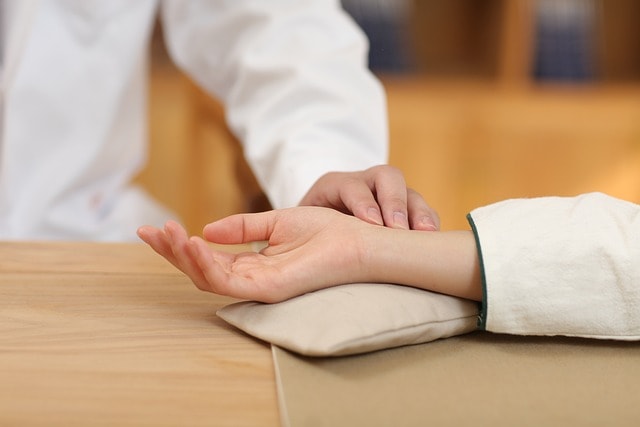
If you feel some of the symptoms mentioned above, visiting a doctor for a professional diagnosis is generally a good idea. Many of these conditions have similar symptoms, and diagnosing them yourself is impossible. Here are some of the common diagnosis methods doctors use:
Physical examinations
Doctors perform a wide range of physical examinations, such as checking for palpitation, performing a range of motion tests, testing grip strength, and performing the Finkelstein test.
Scanning and imaging tests
Ultrasound, MRI, and X-rays are some common imaging tests used to determine the cause of hand pain.
Specialized tests
To confirm their findings, doctors can use EMG tests to check the electrical activity of muscles and identify nerve compression or nerve issues. Doctors often perform nerve conduction studies to diagnose conditions like carpal tunnel syndrome and assess the flow of nerve signals.
Blood sample tests
When your healthcare provider suspects gout or rheumatoid arthritis is causing symptoms, they will also run blood tests to check for diseases, infections, and inflammation.
Medical Treatments for Thumb Conditions
When to Consult a Chiropractor for Your Child
The treatment options depend on the underlying cause and the condition itself. Here are some standard medical treatments you can get from your healthcare provider:
- Nonsteroidal anti-inflammatory drugs (naproxen or ibuprofen).
- Steroid anti-inflammatory medications like steroid injections or corticosteroid medications.
- Topical analgesics like gels and creams.
- Hand surgery (thumb joint replacement, joint fusion, ligament reconstruction, arthroscopy).
- Physical therapy (hand therapy and thumb exercises).
- Cold and heat therapy.
Home Relief Options
Whether you have an underlying degenerative disease or a very treatable condition, there are some lifestyle changes for pain relief at the base of the thumb:
- Resting your thumb and avoiding activities that cause pain.
- Wearing a thumb brace or a supportive splint.
- Thumb stretches and exercises.
- Using aids to grip things and reduce stress on the thumb joint.
- Limit movement when performing normal activities.
- Managing weight to reduce stress on joints, especially when arthritis is involved.
- Eating more anti-inflammatory foods to manage inflammation, reduce swelling, and relieve pain.
Kaizo Health Can Treat Your Wrist Pain
Kaizo Health’s wrist pain services offer a holistic and integrative approach, combining chiropractic care, rehabilitative exercises, and soft tissue therapies to not only alleviate pain but also enhance mobility, strength, and overall function, supporting a healthier, pain-free life.